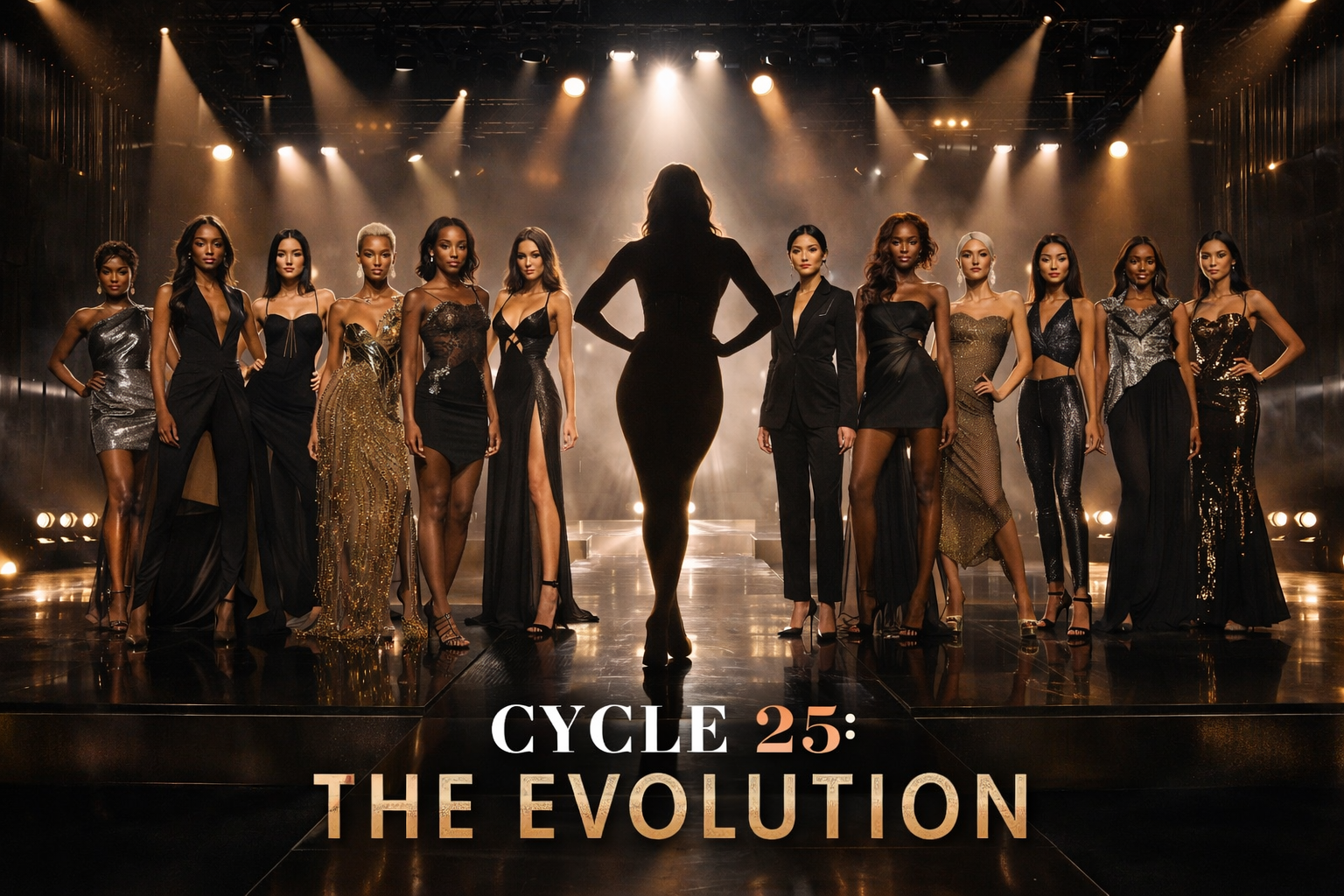
Tyra Banks, ANTM, and the Dark Reality of “Entertainment”: Why Another Cycle Feels Unbelievable
For many of us, America’s Next Top Model wasn’t just a reality show.
It was an era.
It was the blueprint for dramatic television. It was the weekly obsession. It was the moment we sat in
front of the screen waiting to see who would survive the runway, who would get “the makeover,” and
who would be told they simply didn’t have “model potential.”
And it was also something else.
Something darker.
Because now, years later, after the cameras are gone and the theme song is just nostalgia, former
contestants are finally speaking out, and what they’re revealing is not just shocking.
It’s disturbing.
A recent Netflix documentary Reality Check featuring contestants from America’s Next Top Model has reopened a
conversation that many people have tried to bury under iconic quotes and meme-worthy moments: the
emotional manipulation, the physical control, the humiliation, and the trauma that was packaged as
“entertainment.”
And at the center of it all stands one name.
The woman who created the show. The face of the franchise. The powerhouse who told millions of
young women that they could be “the next top model”… as long as they were willing to break
themselves down to earn it.
The Reality Behind the Reality
For years, viewers watched ANTM believing it was tough love.
That it was “just fashion.”
That it was simply preparing young women for the real modeling world.But what contestants are now describing feels less like preparation and more like psychological warfare
disguised as a competition.
Contestants have spoken about being deprived of food, pressured to emotionally expose themselves,
placed in high-stress environments with little support, and then judged for breaking down.
They’ve described being isolated, exhausted, and emotionally triggered, only for those moments to be
edited into television gold.
Because ANTM didn’t just want beauty.
ANTM wanted pain.
ANTM wanted meltdowns.
ANTM wanted real tears.
And the more personal the trauma, the better the storyline.
It wasn’t enough for the contestants to simply model.
They had to suffer.
Makeovers That Went Too Far
One of the most infamous parts of ANTM history is the makeover episode.
For fans, it was iconic.
For contestants, it was often traumatic.
Women were pressured into extreme transformations, including haircuts they didn’t want, colors that
damaged their hair, and styles that left them feeling humiliated or stripped of their identity.
The show framed these moments as “growth” and “breaking boundaries,” but the reality is that many
contestants felt violated.
Because it wasn’t about fashion.
It was about control.
When you take someone’s appearance, the very thing they are being judged on, and you alter it
against their will, that isn’t empowerment.
That is dominance.That is a power play.
And it was done on national television.
The Cruelty Was Not Accidental, It Was the Format
What makes this conversation even more intense is the fact that many former judges and creative
directors have now admitted that the environment was toxic.
Even people like Mr. Jay and J. Alexander (Miss J) have acknowledged how brutal the show was
behind the scenes.
Nigel Barker. Janice Dickinson. & André Leon Talley.
So many personalities passed through that judging panel, and almost all of them played a role in
shaping the culture of the show.
But now, years later, many of them speak with a tone that suggests even they recognize something
wasn’t right.
Because the show didn’t just critique modeling.
It attacked character.
It attacked personal trauma.
It turned real-life insecurities into entertainment.
And it did it in a way that was so normalized, viewers didn’t even realize they were watching something
deeply harmful.
The Most Disturbing Part: Using Trauma as a Challenge
There is a difference between pushing someone creatively and exploiting their pain.
And ANTM crossed that line repeatedly.
One of the most widely discussed moments is when a contestant opened up about losing her mother in
a tragic shooting, and later, the show placed her in a photoshoot scenario where she had to model as
if she had been shot.
That is not “art.”
That is not “edgy fashion.”That is psychological cruelty disguised as a creative challenge.
That is taking a woman’s real trauma and using it as a plot device.
It’s not inspirational.
It’s exploitative.
And it leaves a question that cannot be ignored:
Who thought that was okay?
The ANTM Legacy: Iconic or Irresponsible?
Tyra Banks built an empire from ANTM.
She became a cultural icon because of it.
The show influenced fashion culture, reality TV culture, and even the way young people viewed beauty.
It introduced terms like “smize,” created unforgettable runway moments, and gave people a glimpse
into a world that felt glamorous and unreachable.
But now, that legacy is complicated.
Because if the price of entertainment was the emotional breakdown of young women, then the show
was never just iconic.
It was irresponsible.
It was emotionally violent.
And it trained a generation to laugh at humiliation as if it were normal.
So Why Would Tyra Bring It Back?
Here is where the conversation becomes explosive.
Because after all of this, after the documentary, after the backlash, after contestants have openly
described their pain, Tyra Banks has announced that another cycle of America’s Next Top Model may
be coming.
And honestly?That feels unbelievable.
Not because ANTM can’t be rebooted.
But because how do you reboot a show when its most defining feature was the trauma it created?
How do you bring back a format that thrived on emotional breakdowns without acknowledging the
damage it caused?
How do you revive a brand that many former contestants describe as toxic?
If Tyra is serious about bringing ANTM back, the new cycle cannot look like the old one.
Because if it does, it won’t be nostalgic.
It will be unethical.
A New Cycle Would Need a New Moral Code
If ANTM returns, it needs boundaries.
It needs therapy resources.
It needs consent-based makeovers.
It needs ethical producers.
It needs accountability.
Because reality television is not worth someone’s mental health.
And the modeling industry is already harsh enough without a TV show turning trauma into a storyline.
If the show returns with the same formula, it will prove what many people already suspect:
That ANTM wasn’t about uplifting models.
It was about manufacturing pain.
And if that’s the case, then bringing it back isn’t “a comeback.”
It’s a repeat of the same cycle.
The same exploitation.
The same trauma.
Just rebranded.
The Question We Should All Be Asking
The documentary has done what it was meant to do: it reopened the conversation.
It reminded viewers that behind every dramatic moment we laughed at, there was a real person living it.
And now, with Tyra hinting at another cycle, the world is forced to ask a serious question:
Do we want entertainment… or do we want accountability?
Because we can’t pretend anymore.
We can’t act like we didn’t see it.
We can’t excuse it as “just reality TV.”
ANTM shaped pop culture, but it also shaped trauma.
And now that the truth is being spoken out loud, the reboot isn’t just a television announcement.
It’s a test.
A test of whether society has learned anything.
A test of whether Tyra Banks is willing to evolve.
A test of whether the industry can finally prioritize humanity over ratings.
Because one thing is clear:
If ANTM comes back without change…
Then it was never really about models.
It was always about control.
Final Thoughts: Tyra Banks Is a Legend… But Legends Must Be Held Accountable
Tyra Banks is undeniably a powerhouse.She opened doors. She shifted beauty culture. She created a franchise that dominated television.
But legends are not exempt from accountability.
If anything, they should be held to higher standards.
Because influence comes with responsibility.
And if another cycle of ANTM is truly on the way, then the show must either evolve into something
ethical…
Or it should stay in the past where it belongs.
Because no amount of nostalgia is worth repeating someone else’s pain.